Showing posts with label Black History Month. Show all posts

Friday, February 15, 2013

Sherman Maxwell: The First Black Sportscaster


Before we all loved "Boo-yah!" by Stuart Scott. Before Greg Gumbel and Fred Hickman became pioneers at ESPN and CNN, respectively. Before OJ Simpson was on Monday Night Football. There was Sherman "Jocko" Maxwell, the first recorded Black sportscaster in history.

Maxwell got his start in 1929 doing a 5-minute weekly radio sports report on WNJR in Newark, New Jersey. Despite being turned down 25 times, his persistence was rewarded and soon he became all around the state. He expanded to do radio on WHOM and WRNY in the 30's and 40's and he devoted his energy to his love of baseball.

With the Negro Leagues in full swing at that time, he would call games on the radio and even served as the PA announcer for the Newark Eagles. He'd also submit game stories since the Newark Star-Ledger didn't send anyone to cover Negro League games and eventually wrote a column in Baseball Digest

Maxwell stayed in radio until 1967. He was inducted into the Newark Athletic Hall of Fame and died in 2008 at the age of 100. As the great Sam Lacy was a pioneer for me and so many others in print, Maxwell made waves for future Black sportscasters in radio and television. His stories and recordkeeping would prove crucial to preserving the history of the Negro Leagues as time passed.

To Mr. Maxwell, I say thank you.

Tuesday, February 12, 2013

Black History Month: William H. Lewis


Here's someone I stumbled on late last night looking up some stuff on Jackie Robinson. I knew that Robinson was an All-American football standout and I wondered if he was indeed the first. Turns out, he wasn't (just like he wasn't the first professional Black baseball player) and the guy who was had quite a legacy.

William H. Lewis had a life worth celebrating and it's no surprise that he made history in a region that has been friendly to racial progress in this country: New England. Check the resume of Mr. Lewis in sports and law.

- The first African-American college football player when he suited up at Amherst in 1888. He was noted for his great skill on the field and off the field as an orator and the great W.E.B. DuBois attended his graduation ceremony.

- While attending Harvard Law School, he continued his career and was the first Black All-American college football player in 1892 and 1893 (he was also named Captain of the All-America team in 1893). As a center, he was praised for his quickness, maturity and intelligence and was named Harvard's first Black team captain in his final game. The legendary Walter Camp named him to his All-Time All-American Team in 1900 and hailed him for revolutionizing the position for mobility.

Thursday, February 7, 2013

Max Robinson: A Media Pioneer


For Black History Month, I’ve always had a tradition of telling unfamiliar stories. Maybe it’s because I’m tired of seeing the same legends recycled in schools and among news programs. But ever since I was at my newspaper, I wanted to celebrate more than just the normal.

Today, I celebrate a media pioneer who has been forgotten by some in the 25 years since his death. Max Robinson may not be a name most people under 30 know but as a journalist, he was one of many who made it possible for me to have a career.

He spent 26 years in the business but it was a five-year stretch where he became a national name and blazed a wider trail. In 1978, he became part of ABC World News Tonight as he co-anchored the news Frank Reynolds and Peter Jennings and on July 10, he made history being the first Black person to anchor a network news broadcast.

Wednesday, February 1, 2012

Love, Peace and Soul to Don Cornelius


(This is a great tribute from ?uestlove - well written and a big sign into Don's influence)

Don Cornelius dying on the first day of Black History Month is ironic. Don Cornelius dying in a month devoted to our history, something he did incredibly more to uplift after the civil rights era, is spooky. And it's a perfect reminder to thank him for what he gave my community and America.

As a kid, I remember watching Soul Train after our Saturday morning cartoons went off. We'd watch to see who'd be performing and I loved watching all the dancers. Even in the 90's and early 2000's, Soul Train was still popular and vital, something Cameron Diaz showed in Charlie's Angels when she had a memorable dance scene. And of course, we all knew what the Soul Train line was. At the end, we all tried to do our own version of it.

The genius of Soul Train was how it brought everyone together to watch Black culture. The dancing, the music, the guests. It was a chance for America to see us be ourselves. And fresh after the 1960's, it was a beautiful thing to jump into the 70's and see a self-contained enterprise lead the way.

Don Cornelius was the first African-American to create, produce, host and own his first show. He wasn't just the face of it, he was the engine and the muscle. He crafted the vision of it and with Black music emerging as cool and mainstream, he gave it a platform. The same way American Bandstand gave teenagers a voice, Soul Train gave Black music and its community a positive outlet - ironically Dick Clark was an influence to Cornelius.


(I love this clip for a few reasons. James Brown speaking some truth and a young Al Sharpton giving him an award. Sharpton said today James encouraged him to be on that show and it was a great help to him.)

The best way to break down any barriers is to find a common goal. Music has played a huge role in that - whether it was James Brown saving Boston from rioting after Dr. King died, Bob Marley uniting rivaling candidates in Jamaica, or even helping strangers break the ice. The genius of Cornelius was to take our music to the masses and show them how to have fun. How to enjoy each other and find a common bond that transcended race.

He helped make Black culture cool the same way James Brown did. Not just cool to White America but cool to us as well. He uplifted a community that was beginning to express itself in new ways and in the 70's, it came on the verge of Black culture booming in movies, music, slang and much more.

When you watched Soul Train, you wanted to know what was cool. And Cornelius embodied that cool with his catchphrases, sharp suits and fresh look. It was sad watching him in 2009 at the BET Awards look unhealthy and speak so slowly because the Cornelius I remember hearing about was cool, poised, confident. Yet he still had a presence that reminded you of who he once was.

Soul Train gave voice to funk, R&B, disco, soul, hip-hop. It was a time capsule for what was happening in our culture and popular music and it was a beautiful thing. It crossed racial/generational barriers and for those of us who watched it at any point of our lives, we were blessed for it.


I watched the Soul Train Awards last year for the first time in a while. Gladys Knight was honored (the first guest on Soul Train). Earth Wind and Fire performed. Heavy D's life was celebrated by Whodini, Big Daddy Kane, Goodie Mob and others. That's what Soul Train and Don Cornelius represented - being the voice of our culture and touching so many genres that brought everyone from 8 to 80 together.

Thank you Don Cornelius. He's a vital piece of Black History and American media history. Rest in Love, Peace and Soooooooooooul!

Sunday, February 27, 2011

Black History Month: Why We Still Need It

Bessie Coleman - the first Black female pilot and the first Black pilot with an international license
There's a nagging question that always lingers in February. Why do we need a Black History Month? Some folks are threatened by it, some folks feel that we need to eliminate the celebration of one culture and embrace the culture as a whole. Some feel Black History Month is outdated because it's the same retelling of stories, lacking the true depth and breadth of our history.

I addressed this 2 years ago when I asked "Is Black History Month still relevant?" but I want to add a new twist on it as we end February. Celebrating one's culture does not equal the degradation of another culture. In a perfect world, "does" would be "should" but unfortunately in some cases this isn't true. Yet we need to break something down so we can understand this.

In America, the dominant Eurocentric history was told in schools exclusively until at least 50 years ago. By 1960, African-Americans had long been told they were inferior people relegated to sidekick status. Native Americans were told that they were interlopers on their territory and treated like unwanted pests. Latino history was long forgotten and Asians were just getting over the horrors suffered to them during World War 2. 

There was a need for these groups to tell their stories. Black History Month had been in effect since the 1920's but it wasn't until 40 years later that Black people had the medium of television to show their struggle. Thanks to television and the tireless efforts of too many to name, they got laws passed to protect their citizenship such as voting and discrimination protection.

Garret A. Morgan - inventor of the gas mask and traffic light. 

But the next step was getting our voices heard in the curriculum. While this move was happening, other minority groups and liberal Whites were inspired by the Civil Rights Movement and had movements of their own to rebel against the system. The Black push through the door of equality brought more into the fold and suddenly, academia was forced to change as professors of color were hired and ethnic studies courses along with Black/Latino/Asian/GLBT History courses were added to colleges around the school over the next 40 years.

It's still a struggle today to make a more diverse story is told to our kids and when you have people like the Texas school board of education fighting this, this shows why we need a Black History Month.

While our history and the history of minority groups should be told more often, at least for one month, people get the chance to share in a culture besides eating a particular food or hearing music. They should hear stories they don't usually hear and understand that this too is a part of their America. At the same time, they should celebrate the America they and their ancestors grew up in.

Yes we have American holidays that we all celebrate but all ethnic groups (this includes the various shades of White) have their own unique traditions that are worth celebrating. Just because somebody wants to celebrate something or someone Black doesn't mean we ignore what's White or their overall value to the greater good.

Gen. Benjamin O Davis Jr. - the first Black Air Force general and commander of the famed Tuskegee Airmen. His father was the first Black general in the US. Army. In 1998, Davis Jr. was named the first Black four-star general in the Army.

Case in point, Michael Jackson. Before Thriller, We Are the World and global domination as a superstar, he was an icon to Black America as part of the Jackson 5. No matter how big he got, he never forgot the community he was a part of as he supported Black colleges, BET and those leaders who had his back from Day One. I know this because I saw it firsthand at my old paper when he passed how people remembered him.

Martin Luther King is a global hero of peace and equality. While he eventually transcended solely race issues to focus on other issues that affected people as a whole, he is also a Black icon because this is the community he came from. It is the community he never forgot and died trying to help. The same applies to Malcolm X. They are beloved by us because they served us, spoke to us and were our ambassadors to mainstream America.

It doesn't diminish them or give them a narrow perspective. It just shows they mean something special to the Black community. Just like my blog 2 weeks ago celebrating the White heroes of the Civil Rights Movement, those were men who should be Black icons as well as American heroes. Both titles are possible and both are essential to understanding the full measure of the person.

Beverly Johnson - the first Black model to grace the cover of Vogue Magazine (1974) and Elle Magazine (1975). This cover is almost singlehandedly ushered in the ideal that Black was beautiful to fashion designers.

Every ethnic group has multiple stories to tell and it is up to each of us to not let certain stories be repeated or cultural heroes only be remembered one way. America will soon be a predominately Latino nation and it's important to understand the various cultures while also knowing that we will see things differently. We are indeed a melting pot but what good is it being a Neapolitan pot of different flavors that only mix when warmed up?

So yes, we need Black History Month. We need to celebrate our culture because while we are a part of overall human race, we must embrace the uniqueness that make up that race. There are stories that must be told and there are people worth celebrating who would normally be overlooked.


PS. I addressed White History Month in that two-year old blog post. Let me make this clear. I fully support White people celebrating their history with the understanding that 1) said culture is celebrated often by the mainstream and 2) some people/things you celebrate may not be fondly remembered by members of other communities as well as your own.


As I stated earlier, culture should be praised and celebrated WITHOUT dissing or ignoring another culture's viewpoints. You can celebrate being French, English, German or any other Anglo/European culture along with your state or neighborhood pride. But let's be real, there IS a difference and elevating stories that aren't as well as known in the public sphere when others have been told for years leads to a better story.

This isn't about fairness, it's about understanding that 40 years of America trying to make up almost 200 years of ignorance shouldn't be a cause for disagreement but enlightenment. We all have much to learn from each other and some more than others. Let's come together not in bitterness but with open, willing hearts.


(Someone inspired me to add an uplifting song to this. Something to show that I'm all about unity and celebrating our diversities. This song was perfect. Sounds of Blackness inspired so many people of all races in their time and I hope you find some from this.)

Tuesday, February 22, 2011

Black History Month: Bill Russell


LeBron James last year said that he wanted to change his jersey from No. 23 to No. 6 because he feels that Michael Jordan's number should be retired. As a student of the game, I was disappointed he didn't have a better respect for No. 6 because if he did, he'd know that the man who made that number famous did just as much for the game as MJ.

There are three things you need to know about Bill Russell. First, he's the greatest individual champion in sports history. Second, despite No. 1, he's the greatest embodiment of team-first philosophy in sports history. Third, he fought as hard to uplift humanity as he did his Celtics.

When he was drafted by the Celtics in 1956, Russell was a strange case. A big man who was more renowned for his rebounding and defense that his offense. He came to a city that was slow to integration as the Red Sox would be the last to do so with Pumpsie Green in 1959.

But Russell's story starts earlier - his family left the South to avoid racism and moved to Oakland. His White HS coach treated him with dignity and molded him into a ballplayer to avoid getting into trouble (that same coach would do the same thing a few years later with a kid named Curt Flood). That set the stage for one of the greatest college careers ever as Russell and KC Jones led the Univ. of San Francisco to back-to-back NCAA Titles.


It was there he learned the value of team first over the individual. He was snubbed for an individual award despite averaging over 20 points and rebounds and being a shot blocker. According to him "that let me know that if I were to accept these as the final judges of my career I would die a bitter old man." So as a result, he was more driven to help his team simply win.

If you know Black History you know that Oakland is one of the centers of Black culture. There's a vibe from the athletes and citizens who are from there that says "Not only will we not take racism lying down, we will show you how to fight it with our intelligent anger."

Russell was the first to emerge from Oakland to gain prominence and no matter how big a star he became, he showed people that you conquered stereotypes dead on. Not just with your play but with your words and actions.


Hewas the first Black superstar in the NBA - a shot-blocking, rebounding force who keyed the Celtics offense by playing a new concept of help defense. While Bob Cousy ran the show with amazing handles, Russell was the engine of the dynasty that won 11 rings in 13 years.

His famous rivalry with Wilt Chamberlain was great for the game of basketball - the two greatest at their craft colliding like Goliaths and showing America that Blacks played a beautiful game of skill not just raw ability.

It's important to note that Russell was mentored by progressive White coaches. His college coach, Phil Woolpert, was the first to start 3 Black players in a game. And of course, his pro coach is one of the greatest minds in basketball. Red Auerbach spit in the face of racism many times in his career, including having the balls to start 5 Black players in a game. Their friendship is as legendary as their on-court partnership.


Off the court, Russell faced a hostile Boston press corps and a city that was slow to embrace their champion. After his house was vandalized, he famously called the city a "flea market of racism." An ironic twist from that part of the country being at the forefront of the abolitionist movement a century earlier. I guess if Ted Williams didn't get a pass, why should the Boston media let this Black man not suffer it even worse.

Russell  wasn't afraid to speak his mind on the issues of the day as he marched with Dr. King and others to fight racism while supporting Muhammad Ali's decision to avoid the draft for Vietnam. One of my favorite photos is this shot of Russell, Jim Brown, a UCLA sophomore named Lew Alcindor, Dodgers outfielder Willie Davis and others surrounding Ali to meet with and show solidarity for him. Black Power wasn't a slogan to them, it was action and they weren't letting their brother hang out to dry.


If Russell saw an injustice, he attacked like he did a shot on the court. He demanded respect and never withered in the face of abuse. I heard a story that he didn't believe in signing autographs, but handshakes and genuine conversation.

He made history as the first Black coach of a major sports team in the modern era in 1967. What did he do? Just win two more rings as a player-coach and show that he could lead his team as well as any coach in the league. And for the record, Bill Russell never lost a Game 7 elimination game.

Yet he never forgot the racism he faced. He avoided Boston for years after his retirement, even on the day his jersey was retired. But as time wore on, that relationship warmed and Russell began to receive what he always wanted - respect as a man who sacrificed for the good of the team and winning.

Is it any surprise that when Kevin Garnett came to Boston, he sought out Russell for leadership and counsel before transforming into him on the court en route to being Defensive Player of the Year in 2008? Yes, that year hurt as a Lakers fan but as a hoops fan who watched KG since Day One, I was on-the-low happy for him


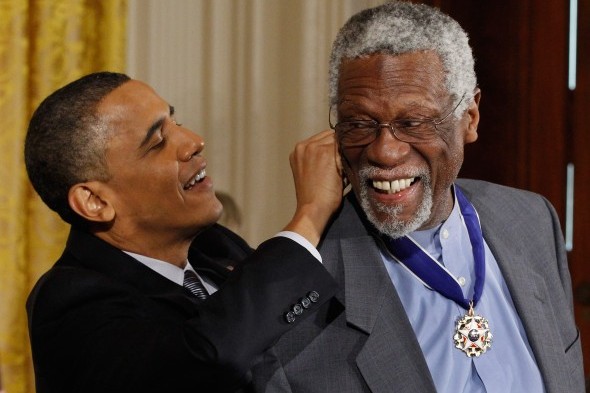
For a man who achieved so many firsts in his career for African-Americans, it's only fitting he became the first NBA Player to receive the Presidential Medal of Freedom, America's highest civilian honor. I'm betting that President Obama was proud to place it around his neck as he knew that Russell was one of many who made his position possible.

His resume is below but here's what it doesn't say. He and KC Jones (who played with him in Boston and coached them to two titles in the 80's) are arguably the greatest 1-2 tandem in basketball history. A fighter for civil rights and equality while serving as a tireless ambassador of the NBA. He encouraged Shaq to end his feud with Kobe Bryant. The NBA Finals MVP is fittingly named after him.


As Black History Month comes to a close, I've always wanted to do a big piece on somebody or something worth telling that doesn't get told. In past years at my paper, I focused on Curt Flood, the New York Rens (basketball's first paid pro team) and Don Barksdale, the first Black All-American and later NBA All-Star. This year, I pay tribute to the champion of champions and a man who deserves to be recognized as one of the greatest men to ever wear a jersey.

He's as important to Boston's sports history as Ted Williams and deserves more recognition around the city. To America, Russell took Jackie Robinson's mantle and showed sports fans that Blacks could be both leaders AND winners (even if it came at the expense of my Lakers).

He was also the first star product of the Oakland scene - the same scene that produced great Black athletes and leaders such as Frank Robinson, Huey Newton, Bobby Seale, Angela Davis, Rickey Henderson, Dave Stewart, Gary Payton, Jason Kidd and current California District Attorney Kamala Harris.


More importantly, he was a key part of the crop of Black athletes in the 60's that stared racism in the eyeball, fought it with their intelligence and their actions and survived to make their sports and their country better for it. Those are my inspirations who stood on the shoulders of the Negro Leagues and Rube Foster, the New York Rens and the NFL's first Black player and coach Fritz Pollard.

Bill Russell lived to make his father proud. Of his titles, he was proudest most of being captain of the Celtics. Individual honors be darned, he was about the greater good. For that, he deserved to be celebrated and recognized and held up as the best of America.

Friday, February 11, 2011

Black History Month: Celebrating White Heroes of the Struggle


I watched Glory earlier this week and no matter what I do, I have to watch the final scene when the 54th Regiment out of Massachusetts storms Fort Wagner. One of the first All-Black fighting units in American History, the final charge always makes me pause and feel pride as a Black man because this unit went into certain death and fought bravely. They earned their stripes throughout the movie and in the end, they died like men. American soldiers despite not having full citizen rights.

Besides the story, I love it because it showed me 1) 3 years removed from Ferris Bueller, Matthew Broderick showed he was a convincing actor, 2) a triple powerhouse of a young Andre Braugher, a pre-typecast Morgan Freeman in his prime and a young, powerful Denzel Washington in his Oscar-winning role can't be beat, 3) Col. Robert Gould Shaw was a noble man worth celebrating. 

In honor of Black History Month, I want to celebrate several White people who played a role in fighting for the rights of Black people and not just because they wanted the fame. They did it because it was right. This list won't include everyone and it's not meant to be racist, it's meant to be celebratory. It's important for Black people to know important allies who truly had their back in front of everyone and for everyone else to know that Black History is American History.


Let's start with Colonel Shaw, a Boston man born to an abolitionist family. Despite some reservations, he led the All-Black 54th Regiment and trained them to be a fine fighting unit. He also encouraged a boycott of refusing pay when he learned his men did not receive equal payment. His parents were honored that their 25-year-old son was buried in the trench with his soldiers. A fitting tribute for a man who died for what he believed in.


History tells us John Brown was a crazy man. A wild-bearded man who went on a crazy raid trying to arm slaves for a revolution and was sentenced to death for murder (hence why I decided to show a different picture of him). But Brown's motivation is just - a God-fearing man who was opposed to slavery on religious grounds and wanted to end it by any means necessary. He was passionate but not because of madness, rather the fight against injustice. Frederick Douglass said this:

"His zeal in the cause of my race was far greater than mine — it was as the burning sun to my taper light — mine was bounded by time, his stretched away to the boundless shores of eternity. I could live for the slave, but he could die for him."


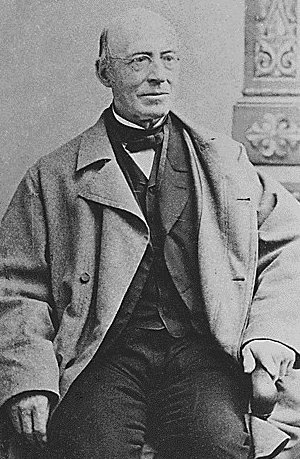
William Lloyd Garrison was arguably the face of abolitionism during the 19th century. He was a New England man who published his pamphlet The Liberator for 34 years calling for the end to slavery and being an advocate for women's suffrage years before the Seneca Falls convention. He reported on the brutalities of slavery and devoted his life to fighting against and other inequities. In an area of tolerance, he lived it to the max.


Andrew Goodman, right, and Michael Schwerner, along with James Chaney, were murdered in Mississippi in 1964, one of the most widely known attacks on the civil rights movement. Both were Jewish men motivated to fight for change and both died for what they believed in. They along with Viola Liuzzo symbolized the White martyrs of the struggle who stood shoulder to shoulder with Blacks to fight for equality and faced the same risks as us. to better their country. I salute all of the Freedom Riders who traveled down south to risk their lives because they didn't have to. They could've stayed comfortable but they didn't.


Norman Lear is a big reason that Black culture reached the small screen during the 70's. He's the producer of classic Black TV shows such as The Jeffersons, Sanford and Son, and Good Times. These shows were not only popular in Black households, they were pioneers for having mostly Black casts and showing the Black experience at a time when America was just getting past the Civil Rights movement. Without them, we don't have the Cosby Show, Fresh Prince or Martin. Lear helped America adjust to Black culture and showed them that we weren't buffoons, but people with real-life issues.


Rick Rubin and Russell Simmons are one of the main reasons we have hip-hop as a business. Rubin helped produce T La Rock "It's Yours" which was the first single Def Jam released. He helped co-found the label with Simmons as both paved the way for the #1 label in hip-hop. He's always been an advocate for great hip-hop from LL Cool J, Run-DMC, Public Enemy to the Geto Boys and Jay-Z. He's defended the rage, passion and creativity of the genre and if there's any White figure at the Mt. Rushmore of Hip-Hop, Rubin's earned it more than any rapper or executive.


Tim Wise is one of the brightest men in the country when it comes to discussing race. Not only does he use his background as a Southerner and a sociologist, he consistently takes his message to White people to educate them on their awareness. Even better, he makes it clear that he is merely saying what Blacks have said for years, never stopping to give credit to great Black minds who have influenced his views. He's a true liberal who doesn't preach to the choir but tries to speak against racism in all forms.

There are many more White men and women who deserve praise for being enlightened and being friends to the Black community over the last 3-4 centuries. Viola Liuzzo and James Reeb, for example, fought for equality in the 1960's and were murdered for their conviction.

I chose to celebrate these examples because they have contributed to Black History and were tireless advocates for change, justice and fairness. They remind all of us that Black History is a part of American history and their open-mindedness should encourage us to pursue justice whether it affects us directly or not.

Friday, February 27, 2009

Stephen Biko (re-up from Myspace)

With Black History Month winding down, I'd figure I'd share something I wrote 2 years ago on MySpace about one of my heroes, South African activist Stephen Biko. Didn't know about until A Tribe Called Quest's "Stir It Up" and Dead Prez "I'm An African" name-dropped him but once I did a school project on him in college, he became one of my heroes. This is what I wrote about him:


"It is better to die for an idea that will live, than to live for an idea that will die" - Steve Biko.


If you look at my heroes section, Stephen Biko is one of the people I name. I did a leadership project on him my last semester of school and I found him to be one of the most compelling people I've ever met. Most people largely don't know who he is but once you hear his story, you wont forget it

Stephen Biko was born in 1946 in South Africa. He was born to well-to-do parents and grew in a society ruled by apartheid, the segregationist philosophy that plagued South Africa until 1990. Imagine the situation for Black people in America before the Civil Rights Movement. Now imagine it to be way more explicit and actually supported by the government instead of just implicitly here. But just like here, protests against apartheid were already set in motion. Nelson Mandela and others had already become enemies of the state because they were vocal in their opposition and tried to get their people to realize their full potential as human beings not just second class citizens.

This was Biko's world. He was on his way to becoming a doctor and perhaps lead a quiet, safe life that was the easier choice of resistance. But political seeds had already been planted in his life. In 1963, his brother went to jail for illegal activity and the police brought him in for questioning. As a result, he was expelled from school and in the process, began to distrust authority. He went on to continue his medical schooling in 1966 at an all-black school but he could not ignore his true calling to be an activist.

In 1967, he became involved with the National Union of South African Students (NUSAS), a multi-racial coalition against apartheid. At their annual convention, Biko became an outspoken critic of how the black delegates had segregated facilities and how only the white students were the outspoken voices of NUSAS. His passion, frankness, and eloquence attracted many black students who felt the same way and in 1969, Biko helped to create the South African Student's Organization (SASO). Its mission was to be a Black-only student group that would speak on Black issues. Biko became the first president and his combination of passion and eloquence made him attractive to Black South Africans who needed another voice to speak for them and it also made him an enemy of the state.


One of the things Biko was critical of was white liberals who tried hard to prove themselves to Blacks how liberal they were but still enjoying the benefits of their whiteness. Basically, they would talk about how "down for the cause" they were but still enjoying their status as 1st class citizens. Something Biko said that made me think was that if whites wanted to prove themselves as true friends, they would try to speak to their fellow whites about the evils of apartheid and not just do in front of Blacks. It's a philosophy that makes sense in any type of activism if you think about it…

Under the pen name Frank Talk, Biko published several essays outlining his views and proposals for a better South Africa. He believed that Blacks had to overcome the psychological problems of thinking they were 2nd class citizens and then they had to embrace their culture and all that came with it. He wanted them to have a pride in themselves (just like Marcus Garvey and Malcolm X did in America) and realize their worth as a people. But of course, this wouldn't fly with the government. He was arrested often and in 1973 was placed on the banned list which means he could not speak in public, meet with more than one person, be quoted in newspapers, and was forced to stay in his hometown. But his work already made a deep impact on the Black South African community and his movement would inspire the infamous Soweto riots of 1976. Biko himself preached and practiced non-violence as the way to achieve his success, but don't just compare to him to MLK and Gandhi. He used nonviolence as a tactic not a true philosophy.

In 1977, Biko was imprisoned for the final time. During this time, he was brutally tortured. He was chained to a steel grate at night, beaten often, slept in own his urine, and was stripped naked. After a month of this, he was transported to another cell and during the long drive, he began to suffer brain injuries from his beatings. The day after he arrived at his new cell, he died at the age of 30, a victim of brutal police brutality. In death, he became a martyr for his people and his friends (black and white) kept his message alive until the end of apartheid.


Over his life, Biko was involved in community programs and created a trust fund to help the families of political prisoners. He also created a fund to help black students achieve their education. More than anything, he wanted to help Black people determine their own destiny and use their voice to speak their mind. He was hugely influential to a new generation of South Africans who would not be kept back (similar to those here in 60's America influenced by the Civil Rights Movement to start the Black Panthers and other groups). Peter Gabriel wrote a moving, haunting song "Biko" in his memory that would inspire the Sun City protests and other apartheid protests in the 1980's.

In 1987, the movie "Cry Freedom" was made about him and his journalist friend Donald Woods. Denzel Washington gave an Oscar-nominated performance portraying him and the only reason I have not seen it yet is because from what I researched, the movie is more about his friend than Biko himself (still a great story about him escaping South Africa from what i heard).* It's a shame though, because Biko's story is deserving of a starring role because he is a compelling figure with a great story and deserves to be mentioned in the same breath as Gandhi, King, X, and Mandela.

*UPDATE: I did see half of it last year and I was impressed with it. Look forward to seeing it all the way through now.

He is one of my heroes and mentors and I thank my leadership professor for letting me do this project. I'll let him have the final words that I believe sum up the driving force behind his work

"In time, we shall be in a position to bestow on South Africa the greatest possible gift – a more human face."


****If you want to read some of his writings, I recommend "I Write What I Like" which is a great window to see his what really went on his mind****

Wednesday, February 18, 2009

Poetry Corner (Black History Month Edition)

I figured I'd post up some of my favorite poems by Black poets. I used to write pretty often and thanks to my job, I don't do it as often as I like to. But pretty much, this is where I'll drop some of my old poems that I posted on MySpace as well as feature some of my favorites. With that said, here's three to ponder.


Langston Hughes "The Negro Speaks of Rivers"

I've known rivers:
I've known rivers ancient as the world and older than the
flow of human blood in human veins.

My soul has grown deep like the rivers.

I bathed in the Euphrates when dawns were young.
I built my hut near the Congo and it lulled me to sleep.
I looked upon the Nile and raised the pyramids above it.
I heard the singing of the Mississippi when Abe Lincoln
went down to New Orleans, and I've seen its muddy
bosom turn all golden in the sunset.

I've known rivers:
Ancient, dusky rivers.

My soul has grown deep like the rivers.


Countee Cullen "The Incident"


Once riding in old Baltimore
Heart-filled, head-filled with glee,
I saw a Baltimorean
Keep looking straight at me.


Now I was eight and very small,
And he was no whit bigger,
And so I smiled, but he poked out
His tongue, and called me, "Nigger."

I saw the whole of Baltimore
From May until December
Of all the things that happened there
That's all that I remember.


Paul Laurence Dunbar "We Wear The Mask"


WE wear the mask that grins and lies
It hides our cheeks and shades our eyes,—
This debt we pay to human guile;
With torn and bleeding hearts we smile,
And mouth with myriad subtleties.


Why should the world be over-wise,
In counting all our tears and sighs?
Nay, let them only see us, while
We wear the mask.
We smile, but, O great Christ, our cries
To thee from tortured souls arise.
We sing, but oh the clay is vile
Beneath our feet, and long the mile;
But let the world dream otherwise,

We wear the mask!

Thursday, February 12, 2009

Is Black History Month Still Relevant?

This is inspired from a conversation I had with a friend when I went to Big Bear in December. Among other things related to this, she asked that well-heard question about why there isn’t a White History Month and I responded back to her with what I thought. But it made me think about if Black History Month is even relevant in the 21st century where color is almost an afterthought for most?


Carter G. Woodson came up with Negro History Week in 1926 because he wanted to celebrate the accomplishments of Black people. He came up with the idea for the 2nd week in February because of the birthdays of Abraham Lincoln and Frederick Douglass. It’s no surprise this happened during the Harlem Renaissance when plenty of prominent Black thinkers/poets/activists came alive with creativity (the "New Negro" phenomenon).

If you consider that the only way most Black people heard about their history was through oral tellings, writing it down was absolutely essential. And consider when you have movies during this era such as “Birth of A Nation,” there was a need to tell the full story instead of it being dictated through the media at a time when racism thoughts were alive and well and lynchings/race riots occurred often (I’ll touch back on that storytelling part in a bit).


Pretty much if not for historians such as Woodson and W.E.B. DuBois (one of my personal heroes), it would’ve remained oral history. These folks recorded Black History and told stories that were well known and not well-known at the time. DuBois’ “Black Reconstruction” deconstructed some of the myths many had about the role of Blacks during that era after the Civil War (myths reinforced by “Birth of a Nation”).

Let’s throw in the fact that most White school children (and predominately White-run schools) from 1876 to 1954 were probably not told anything about Black history that was noble. After Brown v. Board in 1954, I’m sure that White kids were still not taught much for the next decade, especially in the South. So having a Black History Week that later became a month was a way for them to be exposed to another part of American history. Throw in another fact that the Civil Rights/Black Power Movements made people aware of more history and you only have this as a recent phenomenon in America.

Now people wanted to learn more about Black History, it was being added to curriculums across the spectrum. It became a great thing….but now what has Black History Month turned into. A tired retread of same old names and the same old stories. It stopped being fresh the minute I realized it was turning into old folks and others re-hashing the past without adding some vibrancy and newness to it. So now I have to wonder is Black History Month still relevant? Do we still need to celebrate it?

First of all, we need to make it more than just a re-tread of people who’ve already been made famous over the years (MLK, Rosa Parks, Fred Douglass). There’s needs to be a highlight of not-so-well known people so we can tell their stories and have them inspire folks. That’s why every year I’m at the paper I will do stories that highlight not-so-familiar people because their story needs to be told (the last two years, I’ve done the New York Rens – the first Black professional team that was paid – and Don Barksdale (below), the first Black to win a basketball gold medal and play in an NBA All-Star Game before becoming the Black radio DJ in the Bay Area).


Second of all, with people that we’ve heard so much about, we need to make their stories more dimensional. Don’t tell the same facts about that person, tell us something we haven’t heard or don’t hear enough about. For example, talk more about Martin Luther King, Jr.’s commitment to the Poor People’s Campaign and his anti-war stances. You need to make familiar legends relate to a new generation so they don’t see them as a 1-D caricature but a living human being. And we also need to search for this as well and not just settle for what we are told.

Edit: I was in the barbershop and my barber was telling me all this stuff about George Washington Carver I didn’t know about (he did as much with soybeans as he did with peanuts, he was an accomplished painter). I love learning about new people who were just as important whether they were Black Americans or Black people from other parts of the world (like one of my heroes Steve Biko)These are the kind of stories that need to be told this month.

Third, here’s why we need BHM most of all. Remember what I said about it gave Black people a chance to dictate their own history back in the 1920’s? Well in 2009, people still need to dictate their own history and not be told who or what is important. I don’t want people to have a one-sided view of Marcus Garvey and Malcolm X or Martin Luther King and Booker T. Washington. If a group of people or organization can’t dictate their own history and it has to be told to them, it can be manipulated by the storyteller or there is potential for something to be left out.

That is ultimately why BHM is still relevant and why we need to seriously revamp it and give it a makeover to continue making it relevant. It is part of the American fabric and a history buff, I think that quilt needs to be remodeled every once in a while because old stitching can fade and tear. It really needs to be told every day not just one month, but if one month is where people learn a lot of new things, so be it. Let it be the start, not the end-all be all.


*And as for the tired argument about why can’t there be a White History Month, let me counter with this. If you had a White History Month, what would be its purpose? What reason would you need for it besides just to “have it” in the name of fairness? If you wish to promote great White people or White history, consider that many of them have already been promoted for years and are well-known parts of the American fabric.

Promoting Black/Latino/Asian/Women’s/GLBT History is because not everyone knows that side of American History, so it must be told.

Why celebrate "White History Month" if it’s something that is recognized on a consistent basis? I don't have a problem celebrating great people for what they do or celebrating one's culture but if you want a White History Month for the simple reason of having one (or promote people we ALL know or read about in history), you grossly misunderstand why BHM or other history months were created. It's like if I was mad at an Islam Awareness Week when I know good and well that Christianity is the dominant religion here....a worthless argument in the grander scope of things.*