
On the surface, Los Angeles in the 1980’s looked like the place to be. You had the 1984 Olympics becoming the most profitable Games in modern history. “Beverly Hills Cop” did for the Beverly Hills/LA what Miami Vice did for Miami in terms of attractiveness. The sports teams were thriving with the Showtime Lakers, the Dodgers riding Fernandomania in 1981 and Kirk Gibson/Orel Hershisher in 1988 to championships, the Raiders winning in 1984 with USC star Marcus Allen and the Kings in the early 80’s before somehow pulling a monster trade to get Wayne Gretzky.
We had a Black mayor in Tom Bradley, only the 2nd in a major city at the time of his election in 1973.
Not to mention the Sunset Strip was alive and well as hair metal bands like Motley Crue owned the scene while alternative bands like the Red Hot Chili Peppers, Fishbone, Jane’s Addiction and more began carving out a niche as local heroes. Yep, my city was looking good to the visiting eye.
But beneath the surface, there was a lot going on most didn’t know about. In South Central and other urban areas, the crack epidemic hit furious and hard. The gangs changed from guarding territory to becoming more violent. Reaganomics were forcing people to seek extreme measures to find money and security and the drug/gang game proved too tempting for many.
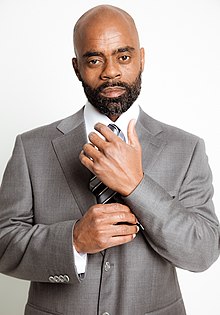
At the center of this was a former star tennis player at Dorsey High School named Ricky Ross who became a small-time criminal in the late 1970’s. By 1980, Ross got introduced to cocaine and became a dealer in Compton/South Central. He made a small profit and then got hooked up even more through Nicaraguan connects Oscar Blandon and Norwin Canterero. By 1982, he was Freeway Ricky leading and organizing distribution and selling of crack cocaine – a cheaper, yet more potent high – throughout L.A. as well as other cities around the country.
Through the drug trade, Ross was friends with the Crips and they used the profits from selling drugs to purchase heavy artillery as well as cars, jewelry and more. It changed the landscape of those communities, ruined family lives and made those areas even more dangerous. It changed the gang lifestyle because as they got more involved in the drug game, turf wars became more violent and innocent folks became victims.
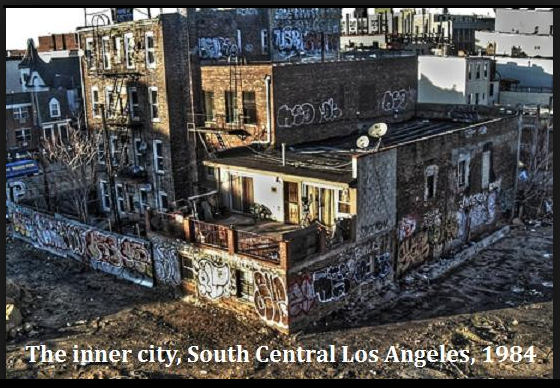
I came to find out later that the apartment complex I stayed in had a landlord who allowed people to sell drugs and rob our neighbors. My area wasn’t a bad area but occasionally you’d see folks hanging around that looked suspicious. It was part of the climate.
These two worlds – the glitz and glamour vs. the gang/drug cultures – were at odds and they still dominate what people perceive LA as. But back then, the gang/drug culture threatened to make the L.A. look like the Wild, Wild West. And the LA Police Department stood in the middle to make sure it wouldn’t happen.
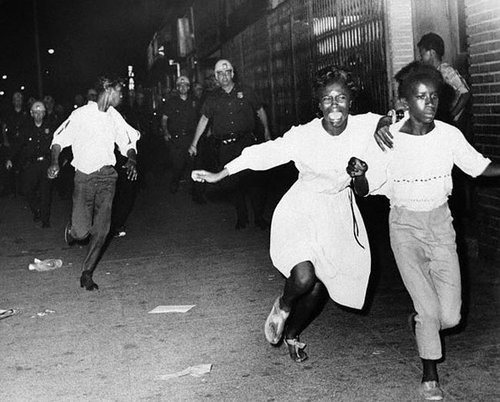 |
| A famous image from the 1965 Watts Riots (also immortalized on the Roots' classic 1999 album Things Fall Apart) |
The LAPD already had a bad taste in some folks’ mouths after the 1965 Watts riots, a 4-day uprising that was one of the first major race riots in the civil rights era and at the time the worst in the city’s history. Then-chief William Parker was notorious for implementing the chokehold to subdue suspects and hiring police officers from the South to “help” control the Black population. His name, I later learned during my time at the LA Sentinel, is still a dirty word to older members of the Black community.
With the crack epidemic/gang violence escalating out of control (a high publicized shooting in 1988 left an innocent bystander dead in Westwood and made people even more fearful), action had to be taken. Leading the way was LAPD Chief Daryl Gates, an authoritative figure who for better and worse laid a heavy hand on areas/people affected by this.

A disciple of Parker’s intimidation and suppression of Black youth without evidence, Gates was police chief from 1978-1992 and he already showed his heavy hand when he (with Mayor Bradley’s blessing) organized gang sweeps in 1984 before the Olympics. Allegedly 25,000 were taken to jail, yet most of them had no charged filed against them. He had enough influence to intimidate those around him, including the media. He openly spied on high-profile figures and planted police to either gather information or start riots (famously the 1982 May Day attack)**
**This all comes from a former LA Times reporter who witnessed this in the 80’s**
As an officer in 1968, it was Gates who developed the first S.W.A.T. units. He initially named them Special Weapons Assault Team but the name was too military in the mind of his boss. Under his watch as chief, the LAPD became nationally known for being tough on crime and using military influences to subdue the Black population. Outsiders praised it; the community feared and hated it.
Throw all that in a crockpot – along with a mostly White police department – and consider what was about to be unleashed in the mid-1980s. With the War on Drugs in full swing nationally and laws being changed to punish drug users severely, Gates responded to the crack/gang epidemic with two programs. The school-safe D.A.R.E. program and the creation of the C.R.A.S.H. units.

Unfortunately, the raids were more rounding up/questioning/arresting/sometimes assaulting innocent folks. One such raid came about as residents complained about drug dealers in the areas yet as 88 police swarmed the area, drugs became a secondary concern.
Two apartments buildings were ransacked and police left their own graffiti as they rustled up residents, arresting folks at will. It cost up to $4 million in damages and no police officers were charged with any crimes, crimes they initially blamed on gang members. 25 policemen were suspended without pay. Many residents who were arrested were also not charged.
The biggest flaw in this raid? No oversight, no control from the LAPD, no tactical planning to handle this situation better. Yet from observers at the time, this type of behavior happened often during Operation Hammer from 1987-1990. Folks were put into databases as gang members with or without proof and when they were stopped, they were treated as such. The LA Times reported that by 1992, 47% of Black males in LA were classified as gang members.
Instead of making the public feel safer, they added to more tensions and perceptions. Of the 50,000 people allegedly arrested during Operation Hammer (the most since the Watts Riots), the majority of them were Black. In one weekend for example, 1,453 were arrested. A cousin of mine told me her son and his friends were driving around and when police stopped them, they were ordered out of the car and forced to lie down while searched (they never got a ticket or were arrested). Most of the folks arrested weren’t charged with anything and it only enhanced a perception that Blacks and Latinos were criminals.
- This is a big reason why as a young man, I was taught how to handle the police. “Yes, sir.” “No, Sir” Don’t make any sudden moves…
This was standard procedure due to heightened awareness of the LAPD yet it created more conflict and mistrust with the police. As I’ll show later, the CRASH units tactics it would prove costly in the late 1990’s with the Rampart scandal.
You can see this in films like “Boyz N The Hood”, “The Wood” and “Colors”. You can hear it in the raps of Toddy Tee’s “Batter Ram” – a song describing a tank-like vehicle used to break open suspected drug houses. Of course, they didn’t always catch the right house and the LAPD never apologized for their mistake.
Most of you probably know two of my city’s finest artists who captured this anger. Ice-T started it off with “6 N The Mornin” and later described the gang life perfectly in “Colors.” And then 5 guys led by a former drug dealer turned businessman amped it up further with a little album called Straight Outta Compton and a track that told the police how they felt called "F--- The Police"
You might hate NWA but along with Ice-T, they articulated the anger of a community. When Ice Cube left NWA to go solo, he carried that anger into his classic solo albums. Young Black men felt like they were being hunted and even if you were on the right path, you were a target because you fit the profile. Black women, too, felt like targets and had anger over their sons/cousins and more being targeted on a whim.

One final note. Another underlying tension was that liquor stores were owned by Asian-Americans, who didn’t trust their Black clientele that were always hanging around. As Part 2 will show, that was just as key an issue as the LAPD task forces and drugs.
Part 2: Rodney and LaTasha
Part 3: Christopher Commission/King Trial and Verdict
Part 4: All Hell Breaks Loose
Part 5: The Aftermath


