Tuesday, November 12, 2013

Blackface and Kanye: Too Comfortable with Hate


Transcending race. Being colorblind. These are all terms that I seem to hear often and after reading David Sirota's "Back to Our Future", I understand these are fairly new concepts introduced in the 1980's. That's why last month was so interesting to me.

Two things happened that showed the problem with this idea. The annual issue with folks dressing up in blackface and Kanye West adding the Confederate flag to his fashion at his shows. First the blackface.

The problem with blackface is that we have a couple of generations removed from the "racist past" who think it's cool to do it without realizing the consequences. They actually bristle at you when you dare tell them it's wrong and offensive instead of apologize and realize the error of their ways.

But today's youth has a unique situation. White kids grow up with a Black president, Black rappers being the biggest pop stars on the planet and White pop stars using Black influences (which isn't new). They're in a society where pop culture is more diverse than ever yet their understanding of individual cultures is limited.

Friday, September 27, 2013

9/29/98: 15 Years Later (The Love Movement)


A Tribe Called Quest is my favorite group of all time. Low End Theory and Midnight Marauders affected me deeply in college and Midnight Marauders is in my personal top 10 – not just hip-hop, but all time.When I saw their documentary last year, I was both happy and sad. Happy to relive my favorite things but sad to see how things fall apart after Midnight Marauders.

That's why it's hard for me to write about The Love Movement because it represents the end*. The end of Tribe. The end of an era. One of the saddest farewells in hip-hop and 15 years later, it still is sad thinking about it being the last album we have with Q-Tip, Phife Dawg and Ali Shaheed Muhammad.

Love Movement isn’t a bad record. It’s not on par with their first three but it’s better than Beats, Rhymes and Life. It’s a farewell where all the old friends gather to pay respects but it’s not a celebration.

Thursday, September 26, 2013

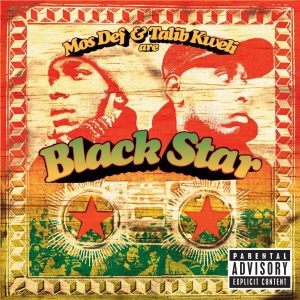
9/29/98: 15 Years Later (Mos Def and Talib Kweli are Black Star)

This is the second in a series looking back at September 29, 1998. A classic release day in hip-hop where several gamechangers came out. This is Part 2 looking at Black Star’s classic debut “Mos Def and Talib Kweli are Black Star.”


It was fitting that A Tribe Called Quest released their last album on 9/29/98 because their torch was passed in two ways. It was passed to OutKast on Aquemini (which I’ll discuss later) but also Black Star, who took a similar road that Tribe carved out.

I first heard Black Star’s album in fall 2004. One of my advisors in our multicultural center passed me a copy that I burned along with The Roots “Things Fall Apart”. Soon as I listened to it, I was hooked by the beats, rhymes and life of hearing two of my favorites start their careers.*

The album felt like a throwback while looking ahead. The “B-Boys will be B-Boys” skit reminded you of when hip-hop was a park jam and dancing was just as important as MCing.

Maybe that’s why Black Star is significant 15 years later. While Jay-Z revived Biggie’s formula and DMX brought the street element, that album was one of the first to try and recreate that early 90’s feel of alternative rap groups like Tribe, De La Soul and others.

Wednesday, September 25, 2013

9/29/98: 15 Years Later (Vol. 2 Hard Knock Life)

15 years ago this Sunday, several albums were released that became gamechangers or showed pivotal moments in the artist’s career. September 29, 1998 would forever be known as a great day for hip-hop and I wanted to reflect on four of those albums that dropped. First up, Jay-Z’s “Vol 2...Hard Knock Life.”


Jay-Z’s growth to the most popular rapper in America is amazing to me because I remember that moment when it first happened 15 years ago when I was starting high school.

It’s when I heard the twin combo of “Hard Knock Life” and “Can I Get A…” dominate the radio that fall of 1998.  Throw in “Money Ain’t a Thang” and all a sudden, Shawn Carter is no longer just another New York rapper but a multi-platinum artist thanks to his third album.

With hip-hop still in a weird place post Biggie/Tupac, enter Jay. His first two albums were great and he had radio singles that were dope (Reasonable Doubt’s “Ain’t No…” and “Can’t Knock the Hustle”) and obvious panders (Vol. 1’s “City Is Mine and “Sunshine”*). He had yet to cross over and this is where his hustler mentality took over combined with his great skill.

In 1998-99, Jay’s success benefited from several things. 1) Linking up with DMX and Ruff Ryders**, 2) The Hard Knock Life Tour which was huge for restoring rap in the public eye, 3) His ability to take what Biggie/Puff did – use obvious samples with gritty rhymes - and go to a higher level, 4) Rap was on the verge of becoming more popular than ever.

Wednesday, August 7, 2013

NABJ 13: Lessons Learned, Skills Acquired, Confidence Raised


So how do put NABJ 13 into words? The annual convention for the National Association of Black Journalists was incredible, inspiring and worth every dime spent. Last year's experience was eye-opening and felt like a goldfish swimming in a bigger tank. This year, I knew what to expect and my plan was stronger.

I asked more questions at panels and took chances to put myself out there. First panel was understanding the business of yourself and how to promote who you are. I signed up to give a 60-second pitch and even though I was nervous, I stood up, handled my business and got some great feedback.

As a bonus? I met a few folks from Los Angeles in the panel, including moderator Mark Luckie from Twitter. I also ran into a friend from last year who ended up becoming one of my closest partners in crime this year (what up Jasmine!). But that symbolized my convention - taking chances and seeing what you can learn from it.

Some more tidbits.

Tuesday, July 30, 2013

The Real Problem with Don Lemon's Words


Don Lemon has risen as the most high profile CNN anchor of color over the past few years. At times, he has shined in his role but recently, he's been the go-to-anchor when it comes to matter of race. I've personally looked up to him as a journalist for a while and I respect his calm and steady presence behind the anchor desk.

That's why when he said that Bill O'Reilly's criticisms of Black people didn't go far enough, it troubled me. He couched his remarks by describing what he witnessed in his Harlem neighborhood.  I've heard this from folks like Larry Elder, Bill Cosby and others. Black people need to do X-Y-and-Z and if you say this out loud, you get celebrated like a bold witness.

Unfortunately, he missed the mark focusing too hard on the wrong things. And the fact that he's being celebrated highlights a bigger issue when it comes to problem solving.

Monday, July 15, 2013

Uncomfortably Numb (Trayvon Martin and America's Sickness)


James Baldwin once said “To be a Negro in this country and to be relatively conscious is to be in rage all the time.” For me, my anger is slowly hardening and replaced with numbness as injustice continues in various forms.

Being Black in America means at some point, you’ll go from shock to anger to numbness at how often things happen to people who look like you. No matter how optimistic you want to be, you start losing hope that things will ever change.

What happened Saturday was the justice system reminding us that it’s not fair. George Zimmerman, due to his legal team doing a great job, wasn’t found guilty of killing Trayvon Martin despite initiating the confrontation. A kid is dead because of racial profiling and perhaps winning a fight he didn’t expect to be in and yet his killer walked.

Martin’s reputation became fair game during a trial instead of Zimmerman’s tendencies for violence and other behaviors. Despite a fair trial, all Zimmerman is guilty of being a vigilante who disobeyed orders and started a fight. Manslaughter was an option and yet the jury could not to find him even guilty of that. More or less, Martin is somehow responsible for his own death.

Trayvon Martin and Oscar Grant. Two victims of the same killer - American prejudice.
But real question. How is this any different than how I felt about Oscar Grant exactly three years ago? Or Sean Bell? Or little Aiyana Jones? Or Chavis Carter? Or Amadou Diallo? How can I be shocked when this happens like clockwork?  

I’m tired of seeing innocent people killed and nobody answering for it. The fact that Grant’s death saw a police officer get only seven months in jail is mind-blowing. Yet when you consider the killers of Bell, Jones, Diallo and more were exonerated, that’s actually a rare victory.

All I am right now is numb. And frankly, I’m tired of feeling that but it’s reality sinking in about this sick world.

Friday, June 28, 2013

Don't Let the Distractions Fool You (Paula Deen, Rachel Jeantel and the Voting Rights Act)


If there's anything I gained from seeing all the news this week, it's a reminder that we're surrounded by a lot of distractions and not enough direction to focus on what matters.

Case in point, Section 4 of the Voting Rights Act was struck down as unconstitutional by the Supreme Court Tuesday. Section 4 says that certain jurisdictions in nine states have to get federal approval on changing voting conditions suggested in Section 5.

So in other words, the Court decided 5-4 that now all states have the right to change up their voting practices without asking for federal approval because we've made so much progress since 1965 and those provisions are irrelevant, according to Chief Justice John Roberts.

That was the words of Chief Justice John Roberts. As shortsighted as that was, it was nice compared to Justice Clarence Thomas saying he would've eliminated Section 5 as well.

But the dominant conversation isn't about the impact of this or how states are already trying to take advantage. No, we're talking about Paula Deen's racist words and Rachel Jeantel's appearance on the witness stand in the Trayvon Martin case.

Sunday, June 23, 2013

Goodbye, World on Wheels: An L.A. Treasure


If you grew up in Los Angeles during the 80's and 90's, World on Wheels was a place to be. Growing up in Mid-City, I attended birthdays there as well as several church outings. Even though there was a worry about a gang presence in the area, somehow the place felt cool where you could just enjoy yourself.

After this weekend, World on Wheels will be no more. Another Los Angeles memory of my childhood gone as time has passed it by and revenue was harder to come by.

I've realized that growing up means saying goodbye to things and people. Skating is a lost art these days and yes, World on Wheels' days were numbered but it's still sad to see something you grew up with become a memory. It's one of the last remaining indoor skating rinks in the city and for 32 years, it made its mark here.

W.O.W. became famous in the 80's because KDAY would host hip-hop concerts there, including NWA and LL Cool J. For me, it was just a great place to go skating. It was where I learned to get comfortable with it like my peers would with roller blades and for a brief part of my life, it was a great place to be.

Friday, June 7, 2013

Out and About: Mission Viejo Arts Alive Festival


Last month, I attended the Mission Viejo Arts Alive Festival since my girlfriend was assisting there for a class project. Besides seeing great chalk work and hearing some dope music from the 1960's, I also got interviewed by Mission Viejo TV for their trivia game. It's a small appearance but trust that I represented my knowledge well.

Also here's some of the artwork that was on display.